
By Elisabeth Burnor
Anyone can be a naturalist. On the Academy blog, our scientists and staff share their knowledge to help you explore the natural world, including your urban backyard or park. Vertebrate paleontologist Jason Downs explains how to develop your paleontology skills while searching for modern traces.
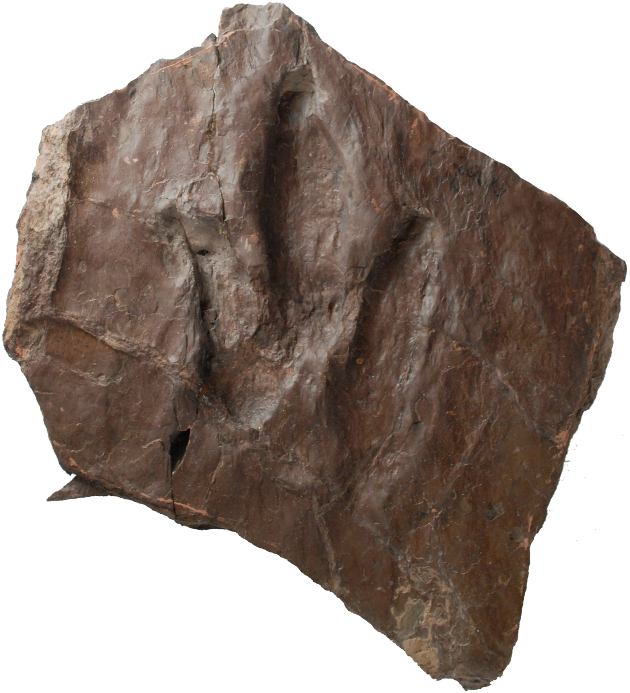
A trace is a record of biological activity in nature. Some examples of traces include footprints, paw prints, or hoof prints; burrows made by rabbits or snakes; holes left in the ground by plant roots; and feeding marks. We can classify traces according to the time that they were formed. There are two main types of traces—trace fossils and modern traces. A trace fossil is evidence of prehistoric biological activity that can teach us about dinosaurs or other ancient creatures. A modern trace is a clue to recent biological activity, and it is produced by animals or plants that are alive today.
 Did you know that modern traces are formed in the same way that trace fossils were formed millions of years ago? A trace fossil of a dinosaur’s footprint may have once looked similar to a dog’s footprint in the mud. Under the right conditions, that dinosaur’s footprint was fossilized. Will modern traces in your neighborhood become trace fossils for future scientists to study? It’s possible!
If you want to go hunting for modern traces, you’ll need to know where to look. One great place to search for traces is in cement sidewalks. Because cement hardens quickly, plants or animals sometimes leave permanent impressions in dried cement. You can also search near a river, lake, or ocean. Soft sediments, such as mud and sand, are perfect for footprint formation, and you could find anything from squirrel prints to frog prints in the mud. You may also find seagull tracks, dog footprints, or even human footprints in the sand. When you’re done searching, you might want to take off your shoes and leave some modern traces of your own!
[color-box color=”red”]Finding Modern Traces
When you find a modern trace, you can follow the same four-step process that paleontologists use when they find a trace fossil.
Identification: Think about what kind of living thing made this trace. If it looks like a plant impression, is it a leaf or a branch? If it looks like a footprint, was it made by a paw or a hoof? Make some guesses and write them down in a notebook.
Excavation: Excavation means removing material from the ground. You may not be able to remove your trace, especially if it is a footprint, but there are other ways to create a record of your discovery. Try sketching the trace in a notebook, or, if you have a camera, snap a photograph. If you’ve found an impression in cement, you can make a tracing of it. Lay a piece of paper over the impression, hold the paper down, and use a crayon to color over the entire piece of paper. A print of your trace will appear on the paper.
Collection: Take home your discovery, and add it to your collection. If this is your first trace specimen, start a brand new collection!
Research: Go on the internet or to the library, and try to find out if your identifications were correct. Once you discover what kind of organism created your trace, make a label out of paper and tape. Labeling the items in a collection, and including where and when you collected each item, is very important because it ensures that scientists from all over the world, and even scientists in future generations, will be able to use that collection for their research.
[/color-box]
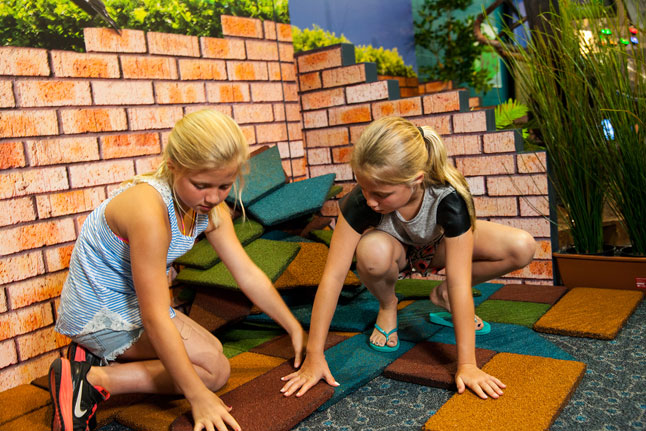
Looking for more fun outdoor activities? Check out the Academy’s special exhibit, Backyard Adventures, where you can experience the magic of a special backyard world. As you ride the bee bike, collect nectar, check out a food web pond, copy critter calls, and even dress up like living creatures, you’ll uncover surprising details about how organisms live and interact in their environments. You can even become a mechanic or engineer by learning the feats of construction that go into building a shed, solving the paver puzzle, and playing garden mini-golf. Figure out how to turn your own garden into a mini-exhibit—you’ll discover more science in your backyard than you’ll ever imagine!
 Backyard Adventures is designed and produced by SciTech and produced by Imagine Exhibitions.
This article was adapted from the Fall 2013 issue of Academy Frontiers.
It is fun and strong, simple and deep Melon Playground, messy and useful all at the same time. It lets users create worlds, try out new things, push the limits, and enjoy the surprising beauty of interactions that are based on physics.
Nice
Well-crafted post with encouraging and inspiring words.
It leaves a lasting impression.
Your website complements it nicely.
Christian Instagram Bios provides thoughtful Christian bio examples.
Great post! I appreciate the effort and detail you’ve put into explaining everything so well. Your website clubbiofb.com is equally amazing, offering a wide range of unique and ready-to-use bios.
This post is informative and enjoyable. Great work!
Also, fbboybio.com is an excellent bio resource.
Wonderful post! It’s engaging, clear, and packed with useful information. Great job!
If you’re looking for trendy Facebook bios, explore fbbestbio.com.
What a beautifully written post! It truly captures attention and delivers value.
And fblovebio.com is an amazing hub for modern bio inspiration.
An excellent and educational piece that readers will truly appreciate. It resonates with the same quality standards upheld by bitesbiohub.com.
I loved this post! It’s clear and engaging. Your website fbclubbio.com looks sleek and professional!
Fantastic article! So easy to read and understand.
Your website is amazing for hilarious bio ideas: fbfunnybio.com.
Great insights shared in this post. Very helpful.
Your platform fbgoodbio makes bio searching effortless.
Very informative and well written. I appreciate the clear explanation and helpful insights you provided. Keep up the amazing work. Also visit: mantips4u.com.